Search Contact Imprint
ICI Berlin Repository
  • Browse

Search

of 132
25–48 of 3152
Just Published
cover imageBook Section
H. Wayne Storey The Intricate Weaving of The Undivine Comedy
In 1992 The Undivine Comedy proposed a new paradigm, showing the narrative threads woven by Dante’s single voice through cantos that linked the three canticles rather than separating them into pseudo-theological units. Barolini’s book challenges us to see the Comedy whole cloth, uncut, within and outside its editorially mechanical infrastructure. This recollection reviews especially the narrative of Barolini’s prose and thought across the breadth of The Undivine Comedy not as a collection of singular insights, or glosse puntuali, but as an integrative meditation on the sinews of narrative itself.
2025. narrative; Dante Studies; de-theologizing; Piacenza, Biblioteca Comunale, Passerini Landi, MS 190; Joachim of Flora
Just Published
cover imageBook Section
Teodolinda Barolini Possible Worlds and Reading Dante’s Commedia: Suspension of Disbelief (Coleridge, Horace, Tolkien, Cecco d’Ascoli) and the Solvents of Narrative and History
Moving from Coleridge’s classic formulation, I discuss the method of reading the Commedia that I call detheologizing and my use, in The Undivine Comedy, of narratology as a solvent that promotes suspending the suspension of disbelief and becoming critical readers of Dante’s poem. When we detheologize, standing outside of the fiction, we detach our interpretation from reliance on the overdetermined binary grid of the Commedia’s structure and unlock the riches of the possible world that Dante made.
2025. suspension of disbelief; possible worlds; detheologizing; realism; narrative in Dante’s Commedia; history in Dante’s Commedia; Coleridge, Samuel; Horace; Tolkien, J. R. R.; Cecco d’Ascoli
Just Published
cover imageBook Section
Kristina M. Olson Introduction
This introduction to A World of Possibilities: The Undivine Legacy situates Teodolinda Barolini’s The Undivine Comedy (1992) as a transformative intervention in Dante Studies that reoriented the field toward narratological and historicized readings of the Commedia. Reflecting personally on her own intellectual formation under Barolini and Joan Ferrante, Kristina M. Olson redefines Barolini’s concept of ‘detheologizing’ not as a negation of theology but as a methodological recalibration that liberates Dante’s poem from inherited interpretive frameworks. The introduction traces the organization of the essays collected in this volume — across narrative, historical, theological, visual, and theoretical axes — demonstrating the broad reach of Barolini’s scholarship and its capacity to generate new critical perspectives.
2025. detheologizing; narratology; historicizing; Beatrice; Brandeis, Irma
Just Published
cover imageBook
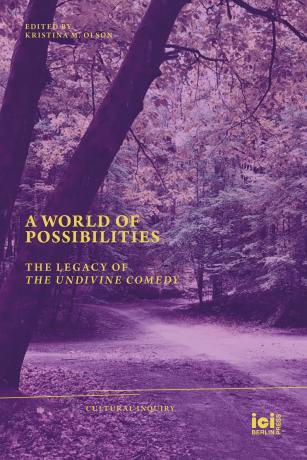
A World of Possibilities: The Legacy of The Undivine Comedy Ed. by Kristina M. Olson
Published in 1992, Teodolinda Barolini’s The Undivine Comedy: Detheologizing Dante was a clarion call for a paradigmatic shift in reading Dante’s Commedia. Bringing together an international cadre of scholars, A World of Possibilities: The Legacy of ‘The Undivine Comedy’ illustrates the generative influence that Barolini’s approach has exerted across continents, disciplines, and generations. It testifies to the variety of interpretations that originate in her method, and opens new perspectives on Dante’s oeuvre and the significance of literature.
2025 | Cultural Inquiry, 37. The Undivine Comedy; Alighieri, Dante; Dante studies; Barolini, Teodolinda; possible worlds; detheologizing; narratology; philosophy of language; medieval studies; poetics
Just Published
cover imageWorkshop
Pier Paolo Pasolini Seeing Otherwise
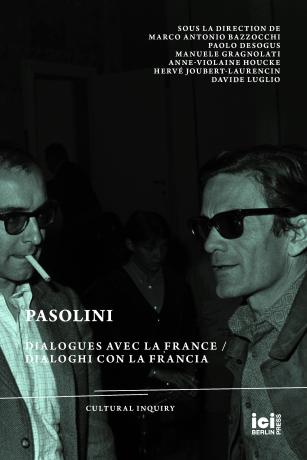
In this workshop, participants probe the enduring relevance of Pasolini’s thought by choosing a concept, theme, or work that they have found particularly interesting and talking about it in 10-minute presentations. Since its inception the ICI Berlin has found a profound source of inspiration in the work and life of Pier Paolo Pasolini, organizing conferences, lectures, and performances as well as producing several publications. On the 50th anniversary of Pasolini’s death, the ICI Berlin organizes a public discussion entitled Pier Paolo Pasolini’s Unstable Geographies, which both goes back to the 2012 volume The Scandal of Self­Contradiction: Multistable Subjectivities, Traditions, Geographies and opens up to two publications in the ‘Cultural Inquiry’ series: Pasolini: Dialogues avec la France / Dialoghi con la Francia (2025) and Reorienting Pasolini, forthcoming in 2026.
2025
Just Published
cover imageDiscussion Video
Pier Paolo Pasolini’s Unstable Geographies
Pier Paolo Pasolini (1922-1975) was a writer and filmmaker deeply rooted in European culture, as well as a public intellectual who moved between different traditions, identities, and languages. Fascinated by peripheries, be it within Italy (in the rural Friuli, the Roman borgate, or Naples) or the Global South (in East Africa, the Middle East, and India), he looked for possible alternatives to the hegemony of western neocapitalism and consumerism. Pasolini’s poetic gaze probed not only different geographies but also disparate temporalities, drawing provocative analogies, and zooming in and out in the constant attempt to unhinge coordinates, hierarchies, and logics. Fifty years after Pasolini’s death, this event explores his multi-scalar aesthetics, its political relevance, as well as its invitation to return the gaze. Chiara Caradonna is senior lecturer at the Departments of Romance Studies and of Comparative Literature at the Hebrew University of Jerusalem, and currently visiting fellow at the the Leibniz Center for Literary and Cultural Research (ZfL) in Berlin. In her research, she explores the intersections between modern and contemporary European literature, continental philosophy, anthropology, photography, and cinema from an ecocritical and decolonial perspective. She has published articles on Pasolini’s reception of the Russian poet Osip Mandel’štam and on his theory and practice of notation across genres. She is the editor of the volume Reorienting Pasolini, forthcoming with ICI Press. Fabien Vitali is wissenschaftlicher Mitarbeiter at the University of Siegen. He obtained his PhD from the Scuola Normale Superiore di Pisa with a dissertation on the essays of Giuseppe Tomasi di Lampedusa. His extensive work on Pasolini also includes the translation and commentary of Pasolini’s conversations with Jewish film journalist Gideon Bachmann, which were awarded the Translation Prize of the Italian Ministry of Foreign Affairs in 2023 (Pasolini-Bachmann, Gespräche 1963–1975, 2022). He translated into German Pasolini’s dialogues with the readers of the communist magazine Vie Nuove from the 1960s (2025). Since 2025, he has been the editor of the Sefiroth| ספירות series at the Galerie der abseitigen Künste in Hamburg. There he recently published the essay ‘Der Zeit widersprechen’, a study on the performative dimension of Pasolini’s cultural criticism.
2025
Just Published
cover imageBook Section
various contributors what kind of we could we be?: collective thinking by collectives
A concluding compilation of drawings, notes, and reflections from participants at documenta fifteen’s ‘What Kind of Collective Could We Be?’ workshop. This visual epilogue enacts collective thought in form and content, documenting humour, intimacy, and ‘affective communities’ that sustain collaborative art worlds beyond theory and institutional frameworks.
2025. documenta fifteen; counter-institutions; collective work
Just Published
cover imageBook Section
Soyoon Ryu ‘The Only Art Form that Works’: Reflections on Collectivity from South Korea [2023]
Soyoon Ryu examines collectivism in South Korea, tracing its shifting vocabularies and feminist articulations through the Rice Brewing Sisters Club. Reflecting on care, sustenance, and embodied collaboration, she argues that collective practices operate as both art and social survival strategy, redefining efficacy, authorship, and community within Korean contemporary art.
2025. collectivity; South Korea; jipdan; donging; hyeophoe; yeonguhoe; sogeureup; artist collaboration
Just Published
cover imageBook Section
Eva Bentcheva Artist-Curator Collectives in Southeast Asia
Eva Bentcheva analyses artist-curator collectives in Southeast Asia that reject colonial art systems by redefining collaboration through community, responsibility, and presence. Drawing on the case studies of The Artists Village in Singapore, the Chiang Mai Social Installation in Thailand, and Green Papaya in the Philippines, she shows how collectivity is harnessed to produce localized publics and pedagogies, as well as self-organized spaces that reimagine art as social infrastructure.
2025. Southeast Asia; modern and contemporary art; artist-curators; The Artists Village; Chiang Mai Social Installation; Green Papaya; collectivity
Just Published
cover imageBook Section
Reiko Tomii Thinking Operationally: Collectivism in Modern Japan and Its Contemporary Evolution
Reiko Tomii traces the evolution of Japanese collectivism since the 1960s. From art groups connected to dantai, to postwar shūdan and performative networks, she proposes the notion of ‘operation’ to describe artists’ social labour, alongside ‘expression’ to demonstrate how strategic alliances forged modern and contemporary art infrastructures. Through theory and historical examples, she argues that collectivism merges aesthetic and social practice in Japanese modernisms.
2025. collectivism; Japan; expression; operation; strategic alliances; dantai collectivism; kōi; shūdan collectivism
Just Published
cover imageBook Section
various contributors what kind of we could we be?: the poetics of we
At the 14th Gwangju Biennial in 2023, a group of 100 artists, curators, and scholars participating in the biennial’s public programme continued the research and brainstorming initiated at documenta fifteen and wrote a document about the poetics of collectivism.
2025. Gwangju Biennale; poetics of collectivism; forms of togetherness; connections
Just Published
cover imageBook Section
various contributors what kind of we can we be?: collective futures
Photographs ‘harvested’ from a collective writing exercise that took place at Asia Forum’s inaugural event on 23 April 2022, held at the Fondazione Querini Stampalia as part of the 59th Venice Biennale. This built on and further developed ideas discussed at a panel talk titled ‘collective futures’, which featured Reza Afisina, a new-media artist and member of ruangrupa, and Saodat Ismailova, a film director and artist.
2025. collective writing; Venice Biennale
Just Published
cover imageBook Section
Gudskul: Collective Study and Contemporary Art Ecosystem, Mai Ling, Nhà Sàn Collective, Projek Rabak, Republic of the Other, and Tomorrow Girls Troop Questionnaire on Collective Practices: December 2022–March 2023
Six Asian collectives — Gudskul, Mai Ling, Nhà Sàn, Projek Rabak, Republic of the Other, and Tomorrow Girls Troop — reflect on why and how they work together. Through shared insights on care, conflict, authorship, hierarchy, and burnout, the questionnaire reveals collectivism as friendship, survival, and mutual learning that sustains creative ecosystems beyond institutional models.
2025. collective practices; collaboration; friendship; radical honesty; kinship
Just Published
cover imageBook Section
Eva Bentcheva, Annie Jael Kwan, and Ming Tiampo Thinking Collectives/Collective Thinking: Introduction
Asking ‘What kind of “we” can we be?’, this introduction outlines histories and methods of collective practice addressed in the book Thinking Collectives / Collective Thinking. Departing from discussions around documenta fifteen, the editors situate Asian genealogies of collaborative practice in a global context. They discuss how artistic, curatorial, and activist modes of collaboration challenge individual authorship, enabling new structures of working, thinking, and world-making, as well as the difficulties this presents.
2025. collective practices; worlded histories; global Asias; documenta fifteen; ruangrupa; Venice Biennale; Gwangju Biennale
Just Published
cover imageBook
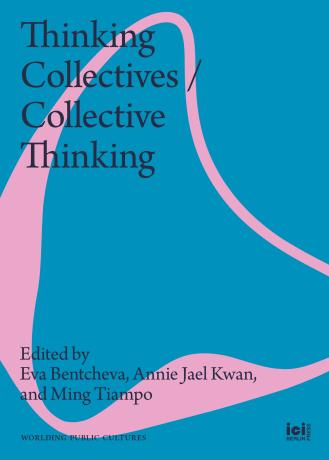
Thinking Collectives / Collective Thinking Ed. by Eva Bentcheva, Annie Jael Kwan, and Ming Tiampo
Thinking Collectives/Collective Thinking delves into the dynamics of collective artistic practices, and looks in particular at histories, personal experiences, and theories in the context of global Asias. Featuring contributions from artists, curators, and activists, it focuses on the diverse contexts that shape both making and researching art. This ‘Companion’ book aims to bridge historical and theoretical knowledge with first-hand experiences and serves as a resource for a ‘worlded’ art history and contemporary practice.
2025 | Worlding Public Cultures. collectivism; affective communities; global Asias; art history; worlding; documenta fifteen; artistic practice; decentralization; kinship; transnational and transcultural gathering places
Just Published
cover imageJournal
Graham, Janna ‘The patient’s concrete society is itself the sick individual’: Review of Psychotherapy and Materialism
Janna Graham, ‘“The patient’s concrete society is itself the sick individual”: Review of Psychotherapy and Materialism’, part 1 and 2, e-flux, 22 October 2025
2025
Just Published
cover imageBook Section
Julie Paquette Soudain Salò (S.S.): Avec toi, contre toi Sade
Dans ce chapitre, nous concentrerons notre analyse sur la place de Sade dans l’œuvre de Pasolini. Pour ce faire, nous présenterons d’abord de quelle manière Sade peut être perçu comme un test de Rorsach, puis nous retracerons les occurrences de Sade dans l’œuvre de Pasolini, pour terminer avec l’avènement Salò. Au terme de ce chapitre, nous suggérerons que c’est avec Salò que Pasolini dialogue le plus avec la France, mais c’est un dialogue qui achoppe et qui trouve peut-être le nœud de son achoppement dans l’apathie sadienne, qui fait écho au désintéressement surréaliste auquel Pasolini ne pourra jamais complètement adhérer.
2025. Sade; Pasolini; Salò; fascisme; nazisme; surréalisme; abjuration
Just Published
cover imageBook Section
Hervé Joubert-Laurencin La Bibliographie de Salò
Salò o le centoventi giornate di Sodoma (1975) débute par un intertitre inhabituel : une bibliographie d’auteurs français célèbres ayant écrit sur Sade. La présente étude tente de prendre en considération la réalité complète de cette image immédiatement offerte au spectateur : en tant que bibliographie ; en tant que plan de cinéma ; en tant que liste de quatre hommes et une femme ; en tant que concaténation de lettres noir sur blanc.
2025. Pasolini; Salò; Sade; De Beauvoir; Barthes; Sollers; fascisme
Just Published
cover imageBook Section
Marco Antonio Bazzocchi La vita sovrana, la parresìa: Tracce di un confronto tra il Pasolini estremo e Michel Foucault
Nell’ultimo Pasolini molte posizioni nascono dalla presa di parola diretta del poeta che dichiara la sua inadattabilità al mondo contemporaneo attraverso la rappresentazione di un sé che rifiuta di adattarsi alle regole del linguaggio poetico, anzi spesso lo rende oggetto di derisione. L’insieme di questi atteggiamenti di Pasolini possono essere ricondotti alla volontà di dire il vero che Foucault in anni vicini sta elaborando con il termine “parresia”. Il saggio ricostruisce alcuni passaggi di questo percorso, intrecciando l’analisi di testi poetici e di dichiarazioni che nel loro insieme possono mostrare come anche per Pasolini la retorica del “dire il vero” sia fondamentale per capire ciò che avviene nella sua opera negli ultimi anni prima della morte.
2025. Foucault; parresia
Just Published
cover imageBook Section
Davide Luglio Barthes lettore di Pasolini
Il saggio analizza il ruolo centrale, benché implicito, che Pasolini assume nell’opera tardo-barthesiana, in particolare nei corsi Le Neutre e La Préparation du roman. Se da un lato Barthes evoca esplicitamente Pasolini come figura di resistenza al potere della lingua, dall’altro la sua influenza si rivela sotterranea ma decisiva nel delineare la pratica di scrittura desiderata da Barthes, intesa come forma etica e poetica. Il testo propone una rilettura della controversa recensione barthesiana a Salò, rivendicandone la complessità e la valenza elogiativa, e individua nella “disperata vitalità” pasoliniana la cifra di una scrittura neutra, irriducibile e resistente. Infine, il saggio avanza l’ipotesi che Petrolio costituisca, seppur inconsapevolmente, il paradigma più vicino al romanzo vagheggiato da Barthes, fatto di appunti, frammenti e di una continua tensione tra vita e scrittura.
2025. Pasolini; Barthes; neutro; scrittura; vita; potere; lingua
Just Published
cover imageBook Section
Andrea Cortellessa La morte al futuro
Sul rapporto di Pasolini con Barthes — fondamentale, negli anni Sessanta, entro il laboratorio teorico di Empirismo eretico — si è scritto molto; meno forse del reciproco di Barthes, che scrive un pezzo in chiaroscuro all’uscita di Salò ma poco tempo dopo introduce la figura di Pasolini, «sentinella che se ne sta al crocevia», «in posizione triviale rispetto alla purezza delle dottrine», nel testo della famigerata Lezione inaugurale del suo corso al Collège de France (per poi tornarvi nel fondamentale corso sul Neutro). In entrambi gli autori, in tempi e in modi diversi, si riscontra un’attenzione turbata per i paradossi temporali instaurati dalla fotografia, e in particolare per l’intreccio di vita e morte che vi si configura.
2025. fotografia; temporalità; morte; entelechia; lutto
Just Published
cover imageBook Section
Gian Luca Picconi Da Sartre «fascista» a Sartre «presente e morto»: «L’addio a Parigi» di Pasolini
L’articolo analizza l’evoluzione del pensiero di Pasolini sulla Francia e su Sartre. Inizialmente, in «L’addio a Parigi», Pasolini critica la Francia per la sua decadenza, arrivando a definire Sartre “fascista” in quanto esponente di una cultura borghese morente e incapace di rinnovamento. Dopo l’incontro con Sartre nel 1962 Pasolini, in «Profezia», esplora l’idea della violenza rivoluzionaria attraverso la figura di Alì dagli Occhi Azzurri, legata alla resistenza algerina. Nonostante questa apertura, Pasolini ribadisce il suo completo rifiuto della violenza come strumento di lotta. Negli anni successivi, la figura di Sartre si trasforma in “San Sartre”, un’icona musealizzata incapace di generare vero scandalo se non attraverso una violenza che Pasolini dal canto suo cerca di superare con altri mezzi.
2025. Francia; Algeria; violenza; Sartre; decolonizzazione
Just Published
cover imageBook Section
Anne-Violaine Houcke Pasolini en Afrique, 1958–69: Quelques figures et intertextes français d’une poétique africaine (Rimbaud, Sékou Touré, Césaire, Senghor, Sartre)
Entre l’épigramme « À la France » (1958), dans laquelle Pasolini se réfléchit à la fois dans le « nègre » Sékou Touré, président de la Guinée, et dans le « blond Rimbaud », et le Carnet de notes pour une Orestie africaine (1969), l’Afrique occupe une place centrale dans l’œuvre de Pasolini. Ce texte étudie quelques intertextes français qui nourrissent sa pensée, et identifie la manière dont la « survivance », d’abord pensée comme moteur de l’alternative féconde entre rationnel et irrationnel, prend peu à peu la forme d’une pensée de l’altérité.
2025. Pasolini; Afrique; négritude; Rimbaud; Senghor; Sartre; Césaire
Just Published
cover imageBook Section
Pierre Eugène Les Cahiers du cinéma face à Pasolini: Différends et embarras
Cet article retrace la réception de l’œuvre et de la figure de Pasolini dans les Cahiers du cinéma. D’abord considéré inclassable, Pasolini se retrouve vite soupçonné de manipulation esthétique et d’insincérité politique, malgré l’intérêt pour ses travaux sémiologiques. Entre recensions contradictoires sur un même film et silence sur la dernière partie de son œuvre, l’embarras des Cahiers du cinéma face à Pasolini révèle, entre malentendus et hantise, l’impureté provocatrice de son œuvre.
2025. Réception; Critique et cinéphilie française; Controverses; Cahiers du cinéma; Esthétique du cinéma; Structuralisme; Marxisme.
of 132
25–48 of 3152

Facets

  • Collections

  • Classes

  • Subject

  • Type

  • Date

  • Language

ICI Berlin Repository

Christinenstr. 18/19, Haus 8
10119 Berlin
+49 30 473 7291 10
publishing(at)ici-berlin.org

Go to …

… ICI Berlin Press Site

… ICI Berlin Publications

© ICI Berlin